Minimalist interior design gets a bit of a bad reputation for looking cold or sparse, like nobody actually lives there. Done right, though, it’s one of the most practical approaches for small apartments specifically — because every piece has a purpose, and nothing competes for visual attention in an already tight space.
What Minimalist Design Really Means
Quick answer: Minimalist interior design for small apartments focuses on functional furniture, a limited color palette, hidden storage, and intentional negative space — not simply having fewer belongings, but making sure everything that remains actually earns its place in the room.
It’s less about deprivation and more about intention.
Choose Furniture That Serves Multiple Functions
In a small apartment, every piece of furniture should ideally do more than one job. A storage ottoman doubles as seating and hidden storage. A daybed works as both a sofa and a guest bed. This approach reduces clutter naturally, since you’re not adding separate pieces for every single function.
I’ve found that once I started thinking “does this need to do two things?” before buying furniture, my apartment felt significantly less crowded without actually owning less stuff overall.
Stick to a Limited Color Palette
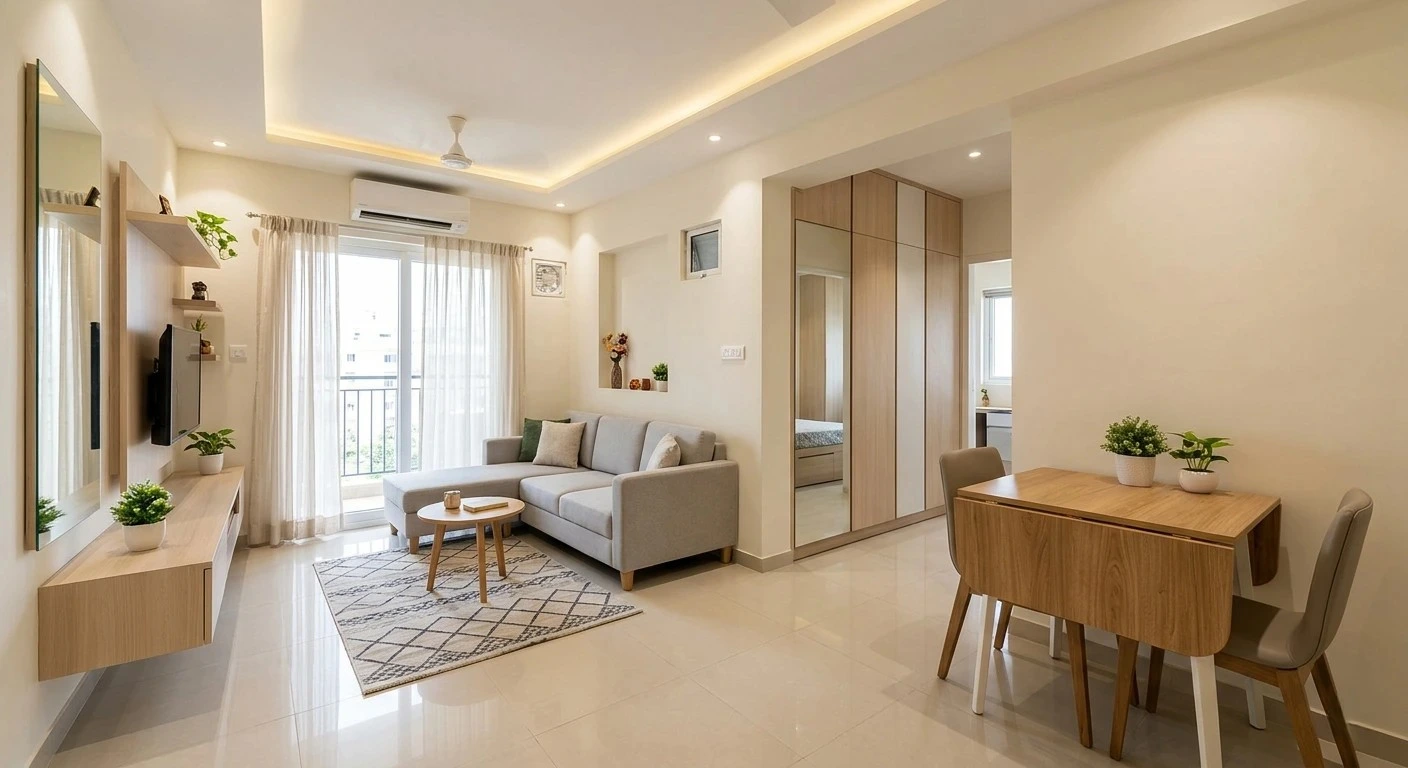
A cohesive, limited color scheme — typically 2-3 main colors plus neutrals — creates visual calm and makes a small space feel larger, since the eye isn’t constantly adjusting to color changes across different surfaces. This doesn’t mean everything has to be white; muted earthy tones or soft pastels work just as well within minimalist principles.
[link to related guide about paint colors for small rooms here]
Embrace Hidden and Vertical Storage
Minimalist doesn’t mean having nowhere to put things — it means keeping things out of visual clutter. Vertical shelving, under-bed storage, and furniture with built-in compartments let you store belongings without them visually crowding the room.
Some practical storage approaches:
- Wall-mounted shelves instead of freestanding bookcases, which free up floor space visually
- Under-bed storage boxes for seasonal items or things used infrequently
- Furniture with hidden compartments, like a bed frame with built-in drawers
Let Negative Space Do Its Job
One of the hardest things for people to accept in minimalist design is that empty space isn’t wasted space — it’s an intentional design element. Resist the urge to fill every corner or surface. A little breathing room around furniture pieces genuinely makes a small apartment feel more spacious than cramming it full.
Reduce Visual Clutter, Not Just Physical Clutter
Even organized storage can create visual noise if it’s out in the open. Closed cabinets and drawers keep small item clutter — chargers, mail, miscellaneous objects — out of view, which matters more in small spaces where every visible surface has an outsized visual impact.
[link to related guide about minimalist storage solutions here]
Quality Over Quantity in Decor
Minimalist design favors a few well-chosen decorative pieces over many small ones scattered throughout. One striking piece of art or a single well-placed plant does more for a room than a dozen small trinkets spread across shelves and surfaces.
Natural Light and Simple Window Treatments
Minimalist spaces lean on natural light rather than heavy layered window treatments. Simple, light-colored curtains or blinds that let light in fully during the day keep the room feeling open, rather than heavy drapery that can visually shrink a small space.
FAQ
Q: Does minimalist design mean owning very few things? Not necessarily — it’s more about intentionality, keeping items that serve a real purpose and reducing visual clutter rather than a strict low item count.
Q: How can I make a small apartment feel bigger with minimalist design? Multi-functional furniture, a limited color palette, and embracing negative space rather than filling every corner all contribute to a more open feel.
Q: Is minimalist design too cold or impersonal for everyday living? Not if done thoughtfully — a few well-chosen personal or decorative pieces keep a minimalist space feeling warm rather than sterile.
Q: What furniture works best for minimalist small apartments? Multi-functional pieces like storage ottomans, daybeds, and furniture with built-in storage compartments work particularly well.
Q: How many colors should a minimalist color palette include? Typically 2-3 main colors plus neutrals, creating visual cohesion without feeling monotonous or overly restrictive.
Conclusion
Minimalist interior design works especially well for small apartments because it forces intentional choices about what actually earns a place in a limited space. Multi-functional furniture, a restrained color palette, hidden storage, and embracing negative space all work together to make a small apartment feel calmer and more spacious. It’s not about having less for the sake of it — it’s about making sure what you do have genuinely serves the space.
Image Alt Text Suggestions:
- “Minimalist small apartment with multi-functional furniture”
- “Limited color palette living room in minimalist design”
- “Hidden storage solutions in minimalist small apartment”