There’s a particular sound an AC makes right before it dies completely — I’ve heard it more times than I’d like. Most HVAC repair situations don’t come out of nowhere; there are warning signs weeks, sometimes months, before a full breakdown. The trick is knowing what to listen and look for.
The Early Warning Signs
Quick answer: Common HVAC repair signs include unusual noises, weak airflow, warm air from vents, unpleasant odors, and rising electricity bills without increased usage. Catching these early usually means a cheaper repair instead of a full system replacement.
If your system is doing any of these, it’s telling you something.
Strange Noises From the Unit
A healthy AC or heater runs with a consistent, low hum. Rattling, grinding, or squealing noises usually mean a mechanical part is failing — a loose fan blade, worn bearings, or a failing motor.
I always tell people: don’t ignore new noises just because the unit is “still cooling fine.” By the time cooling performance drops, the underlying issue has usually gotten worse.
Weak or Inconsistent Airflow
If some rooms feel cool and others don’t, or airflow feels weaker than it used to, this points to duct issues, a failing blower motor, or a clogged filter — the last one being the easiest and cheapest fix.
Quick things to check yourself before calling anyone:
- When did you last change or clean the filter? (Should be every 1-3 months)
- Are vents blocked by furniture or curtains?
- Is the outdoor unit covered in debris or leaves?
Warm Air Instead of Cool
This one’s obvious but people delay calling for repair anyway, assuming it’ll “fix itself” after a day or two. Warm air from vents usually points to refrigerant leaks, a failing compressor, or electrical issues — none of which resolve on their own.
[link to related guide about common plumbing problems here]
Unpleasant Odors
A musty smell usually means mold growth inside the ductwork or unit, often from excess moisture. A burning smell is more serious and could indicate an electrical fault — that one needs immediate attention, not a “let’s wait and see” approach.
Rising Electricity Bills
Here’s something people often miss — if your electricity bill jumps without any change in usage habits, your HVAC system is likely working harder than it should to achieve the same output. This is one of the quieter HVAC repair signs, but it’s a reliable one.
A system that’s losing efficiency due to a dirty coil, low refrigerant, or a failing part will draw more power for the same performance. It’s basically the system telling you something’s wrong, just through your bill instead of a noise.
Frequent Cycling On and Off
If your AC or heater turns on and off more frequently than usual (short cycling), it’s often a sign of a failing thermostat, an oversized unit for the space, or a refrigerant issue. This wears the system down faster and increases repair frequency over time.
[link to related guide about home maintenance checklist here]
When to Repair vs Replace
As a rough guide, if your HVAC system is under 10 years old and the repair cost is less than 50% of a replacement, repair makes sense. Beyond that age or cost threshold, replacement is usually the smarter long-term investment.
FAQ
Q: How do I know if my AC needs repair or just a filter change? Try changing the filter first — it resolves a surprising number of airflow and efficiency issues on its own. If problems persist, call a technician.
Q: Is it dangerous to ignore a burning smell from my HVAC unit? Yes, a burning smell can indicate an electrical fault and should be checked immediately, not delayed like other minor issues.
Q: How often should HVAC systems be serviced? Ideally once or twice a year, before peak summer and winter usage, to catch small issues before they become bigger repairs.
Q: Why is my electricity bill high even though my AC seems fine? A struggling HVAC system often draws more power to maintain the same output, even if it still seems to be cooling adequately.
Q: Can I repair HVAC issues myself? Filter changes and clearing debris around outdoor units are DIY-friendly. Anything involving refrigerant, electrical components, or the compressor needs a licensed technician.
Conclusion
Catching HVAC repair signs early is the difference between a ₹2,000 fix and a ₹40,000 replacement. Strange noises, weak airflow, warm air, odd smells, and rising bills are your system’s way of asking for help before it fails completely. Don’t wait for a hot summer afternoon breakdown to take these signs seriously — get it checked the moment something feels off.
Image Alt Text Suggestions:
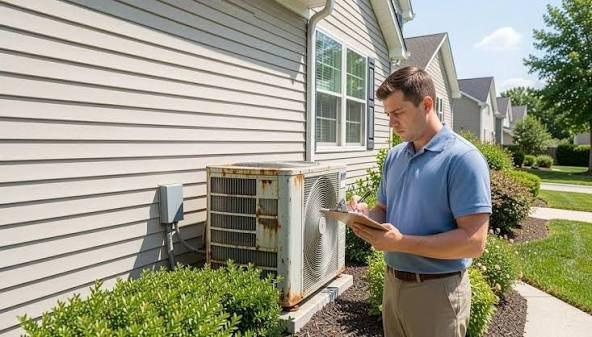
- “Technician inspecting HVAC unit for repair signs”
- “Dirty air filter causing HVAC airflow issues”
- “Outdoor AC unit needing maintenance and repair”